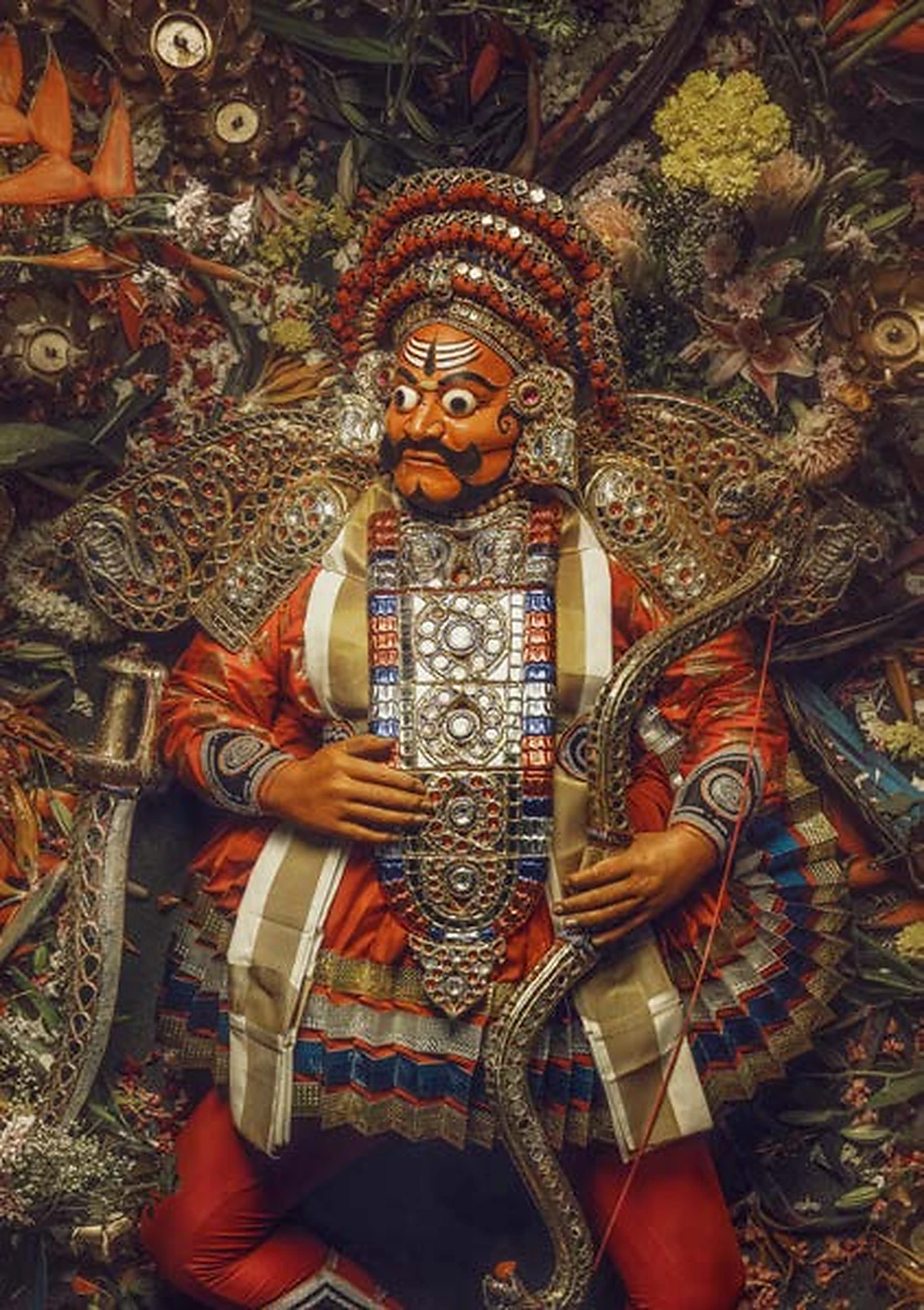
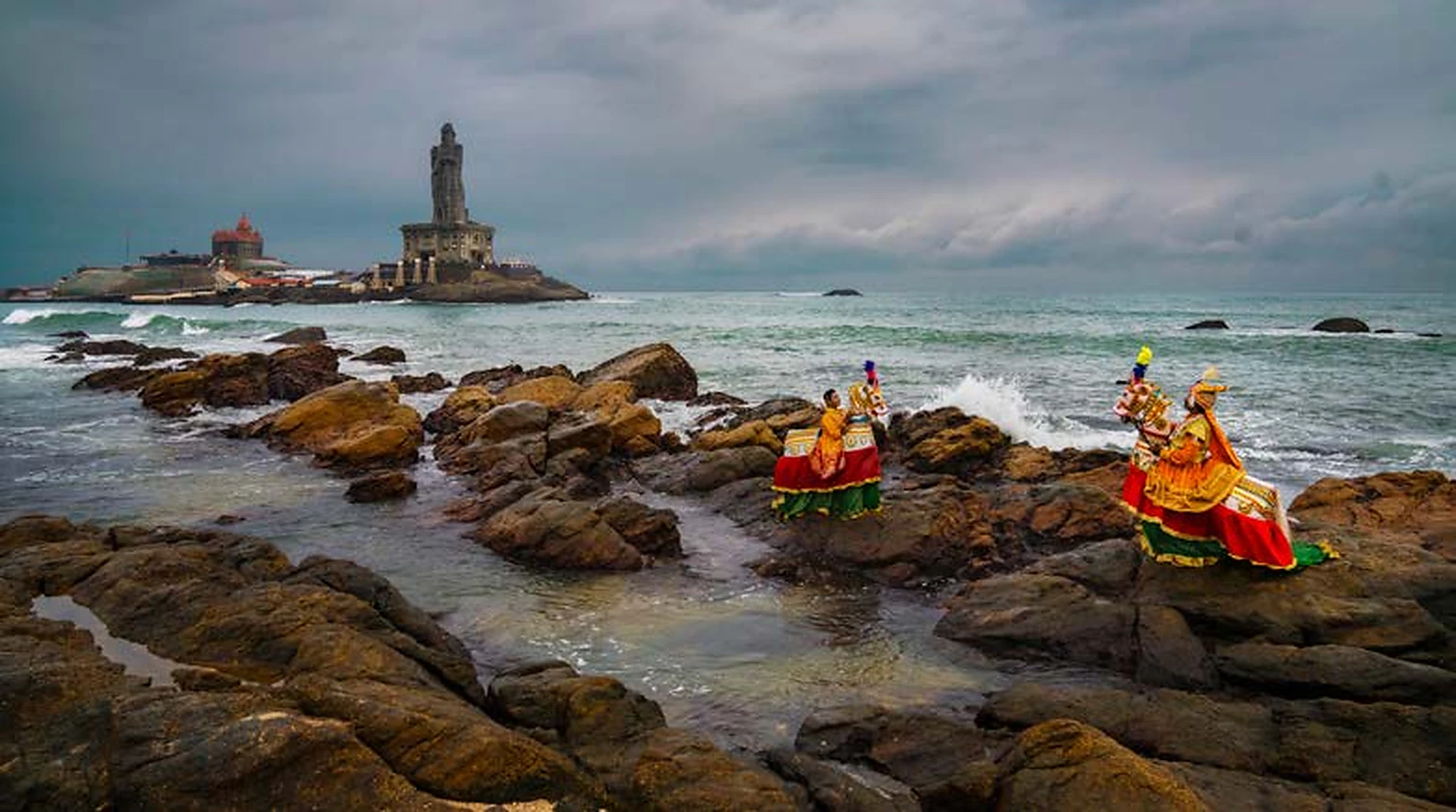
Performers in vivid traditional dress photographed on a rocky shoreline

The Artistic Conversations · India

Amar Ramesh
Culture in Motion

Photography begins the archive. The larger work is helping inherited knowledge travel into books, design, technology, institutions and the imagination of another generation.

Image: Amar Ramesh · from the supplied catalogue

An Artistic Conversation

Moderated and interpreted by Tallulah Patricia Bär

Chennai ↔ Zürich

Remote conversation · 2026

Photography · Heritage · Design

Architecture · Performing arts · Publishing

The premise

What if preservation is not enough?

Amar Ramesh returned to India with a camera and a frustration: cultures with far less history often seemed better equipped to explain, package and circulate their heritage. Tamil Nadu held ancient temples, architectural knowledge, performance traditions, crafts and living rituals of extraordinary depth. Yet much of this inheritance remained poorly documented, difficult to access, or invisible outside its immediate context.

His first response was photography. The deeper response became an ecosystem.

Through Studio A, he built a commercially successful photography practice. Through books and documentary films, he began recording temples, musicians, dancers, artisans, domestic architecture and threatened traditions. Through collaborations with students, designers and engineers, he started testing how inherited forms might acquire new uses. His ambition is not to keep culture untouched. It is to help culture remain consequential.

“My goal is to reshape these forms and reproduce them differently. I want to be a bridge between science, innovation, technology and the art forms.”

Amar Ramesh, edited from the conversation
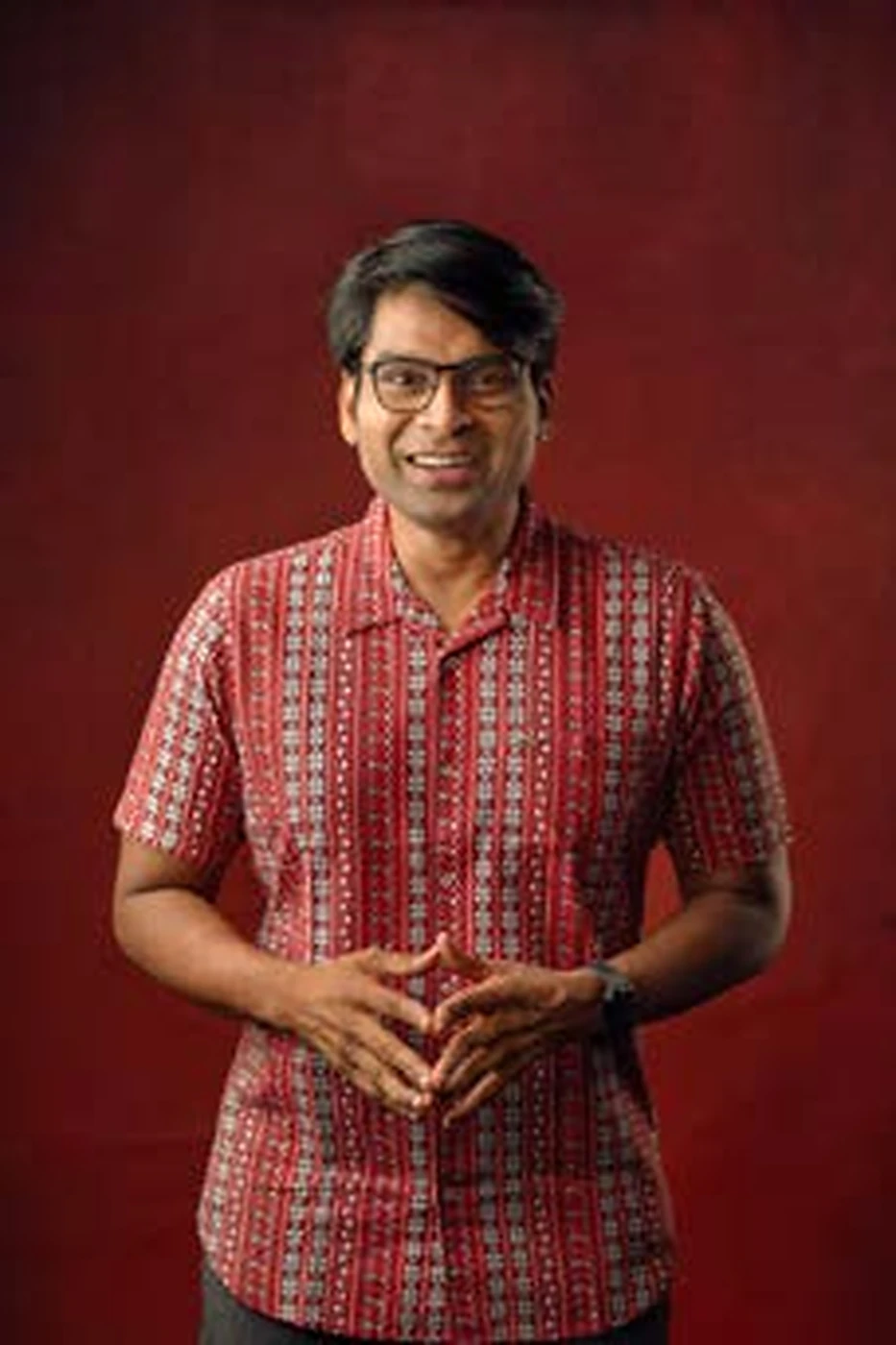
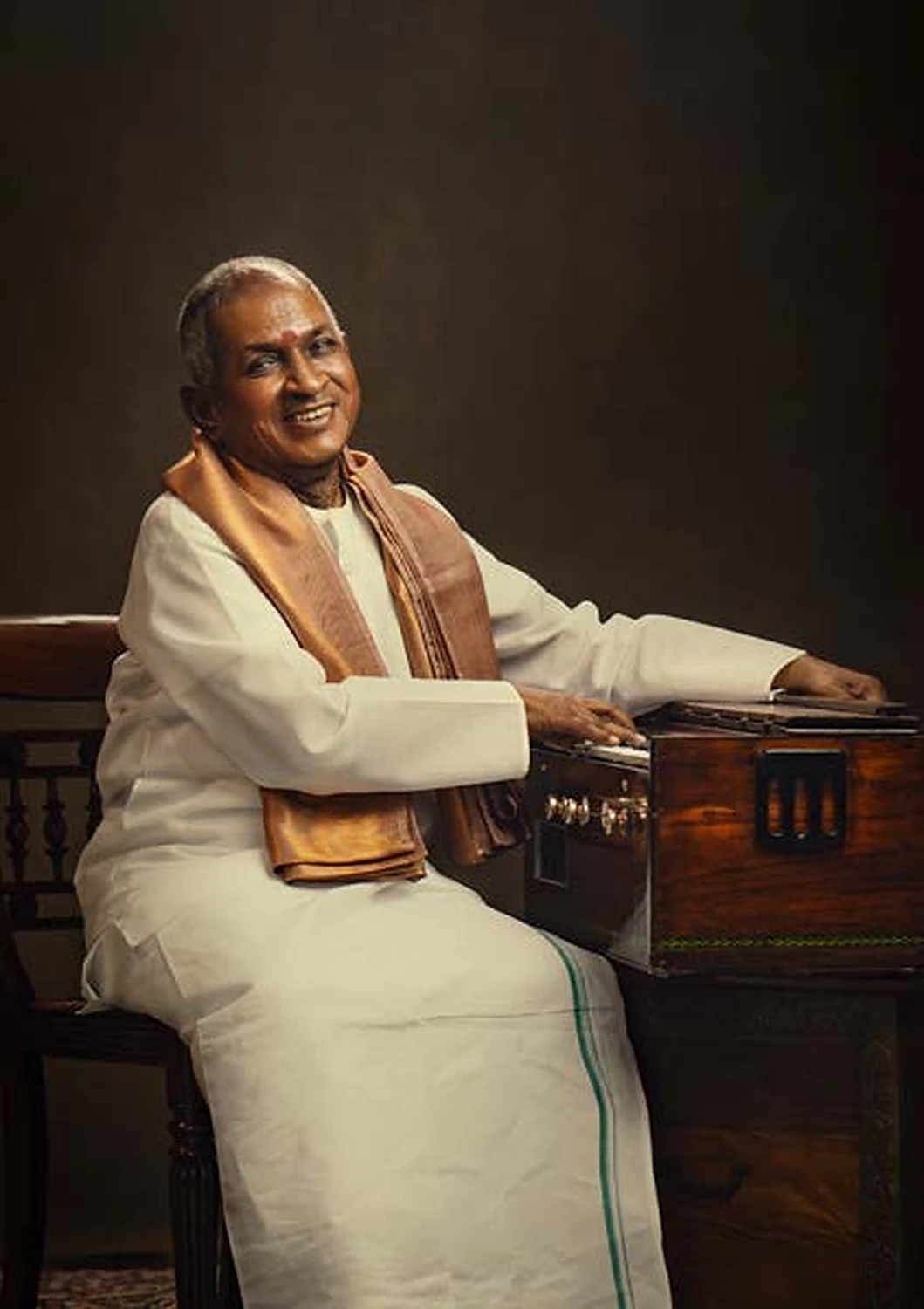
Portrait of Amar Ramesh wearing a patterned red shirt

Portrait: Amar Ramesh catalogue

From engineering to image-making

The camera entered through travel

Amar did not begin by imagining an artistic career. He studied engineering, completed a master’s degree in the United States and spent almost eight years working in technology. His work involved constant travel: leaving on Monday, returning on Friday, and eventually deciding to remain on the road over weekends to explore.

He bought a camera to make sense of those journeys. Friends encouraged him. An expensive hobby became a serious apprenticeship, then a decision. He left his technology career and returned to India intending to build a cultural documentation project around South Indian temples.

The project was larger than one photographer could finance. Then a wedding assignment changed the trajectory. The photographs travelled widely, Studio A grew, and a commercial practice became the economic and organisational base from which the cultural work could continue.

Studio A
Founded and led by Amar Ramesh
Visual narratives
More than 750 weddings
Geographies
22 countries
Parallel practice
Books, films, fine-art archives and cultural documentation
Film interlude

NATYA: classical movement, contemporary image-making

In the Sony film NATYA, Amar brings multiple Indian classical dance forms into a visual language designed for a contemporary global audience. The collaboration demonstrates one of the central tensions in his work: the camera is cutting-edge, but the image is not asked to replace the tradition. It is used to give the tradition new scale, clarity and circulation.

A method, not a single medium

Document. Interpret. Intervene. Circulate.

  1. 01

    Document

    Photograph and film places, people, tools, processes, materials and visual languages before access or knowledge disappears.

  2. 02

    Create awareness

    Use talks, social media, books, airports, public displays and films to make local knowledge visible beyond specialist circles.

  3. 03

    Design interventions

    Connect artisans and traditions with engineers, designers, students and new applications rather than treating the archive as an endpoint.

  4. 04

    Build circulation

    Translate the work into exhibitions, publications, interiors, institutions and international conversations that can sustain attention.

Chettinad

Every entrance is a statement

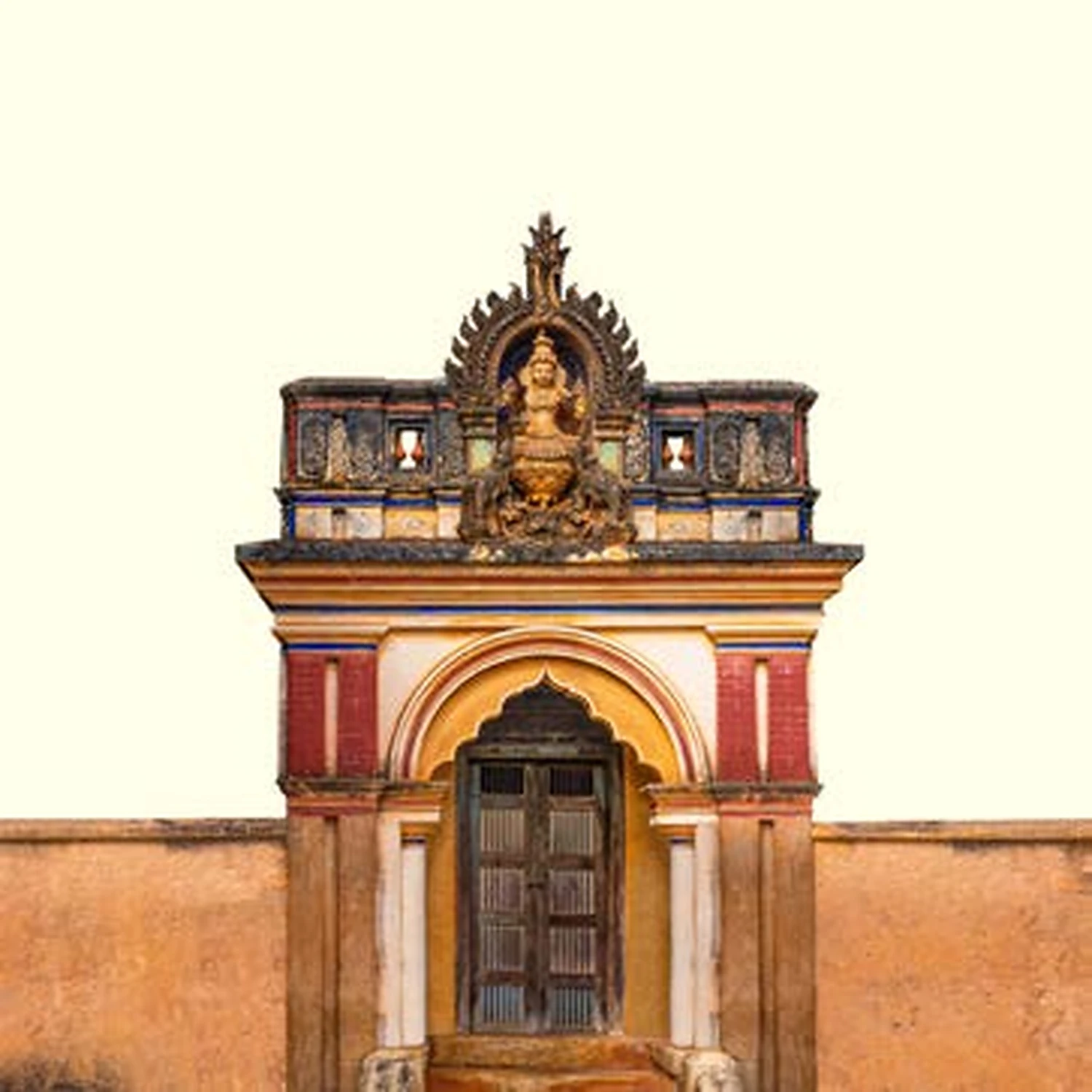
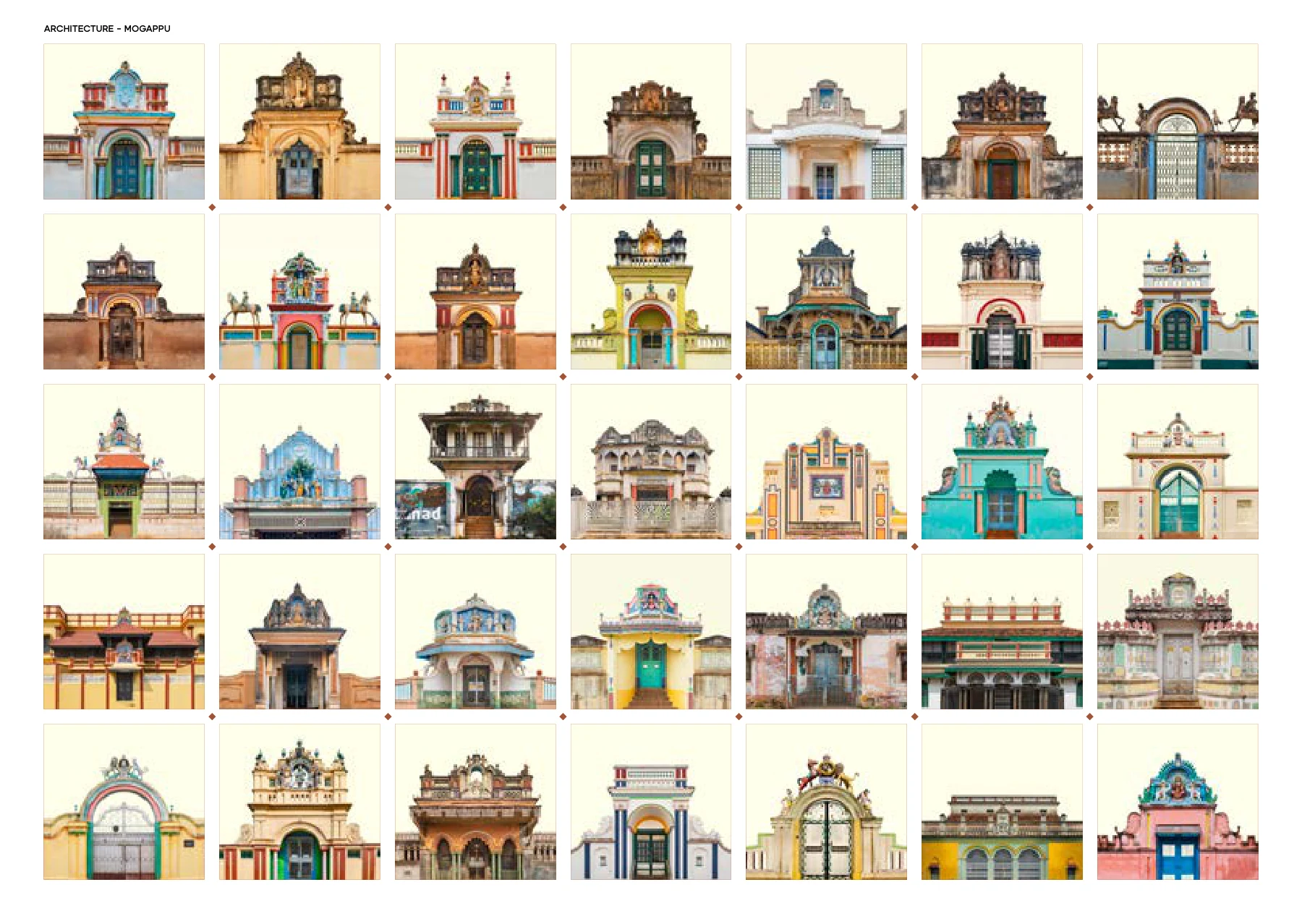
In Chettinad, the portal is not a neutral threshold. It speaks of status, faith, commerce, aspiration, migration and craftsmanship before a visitor enters the house.

Amar described walking repeatedly through the region, knocking on doors and seeking permission to photograph buildings whose ownership may now be divided among many descendants. Some houses are maintained; others are converted, dismantled, sold for architectural salvage or simply lost. He noted that structures photographed for an earlier book no longer exist.

The series Mogappu isolates the public face of these mansions. The forthcoming and related work on Valavu moves beyond the frontage into the courtyards, halls and interior worlds of the houses. Together they are not merely architectural photographs. They form a record of trade, migration, material exchange and social life.

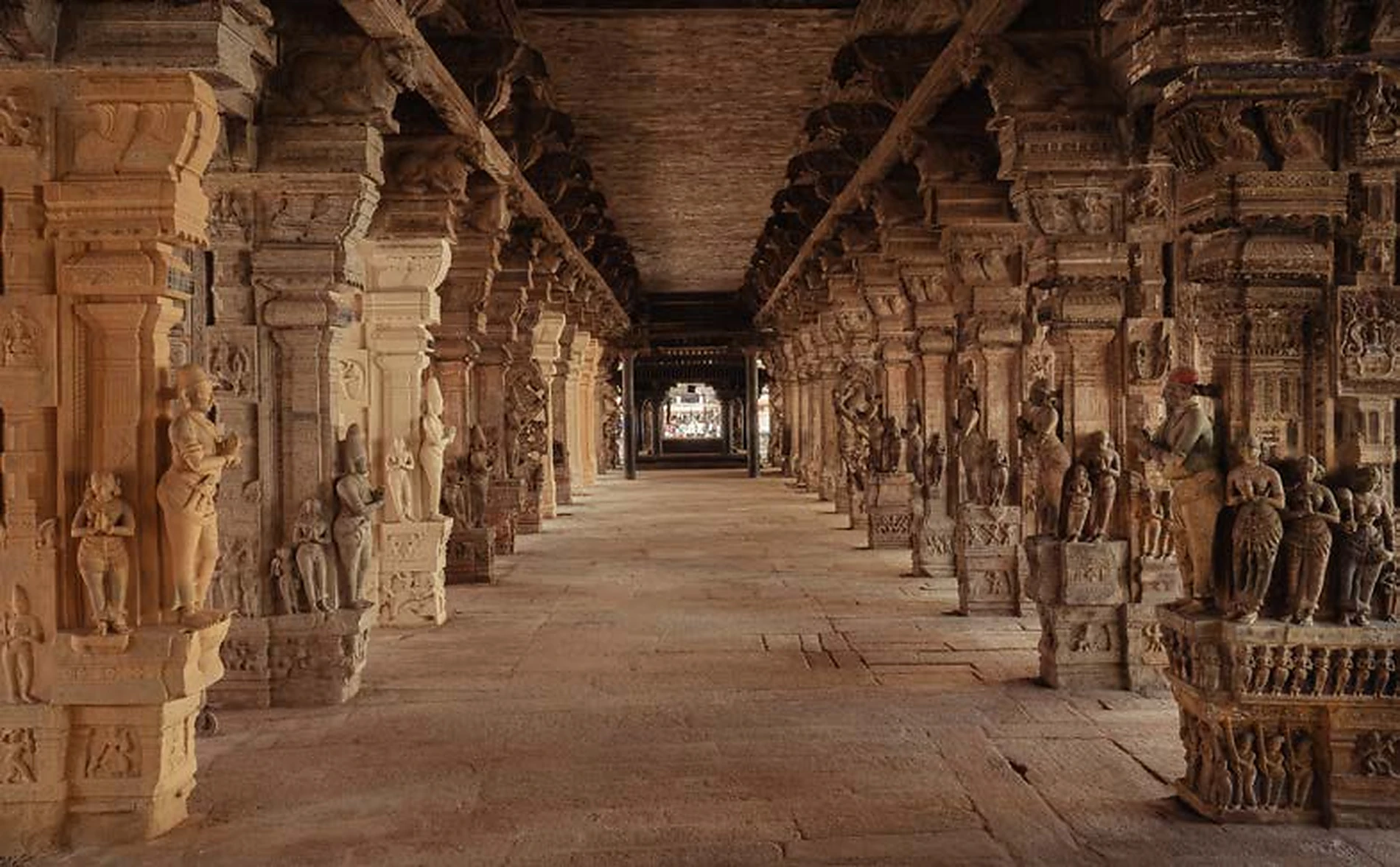
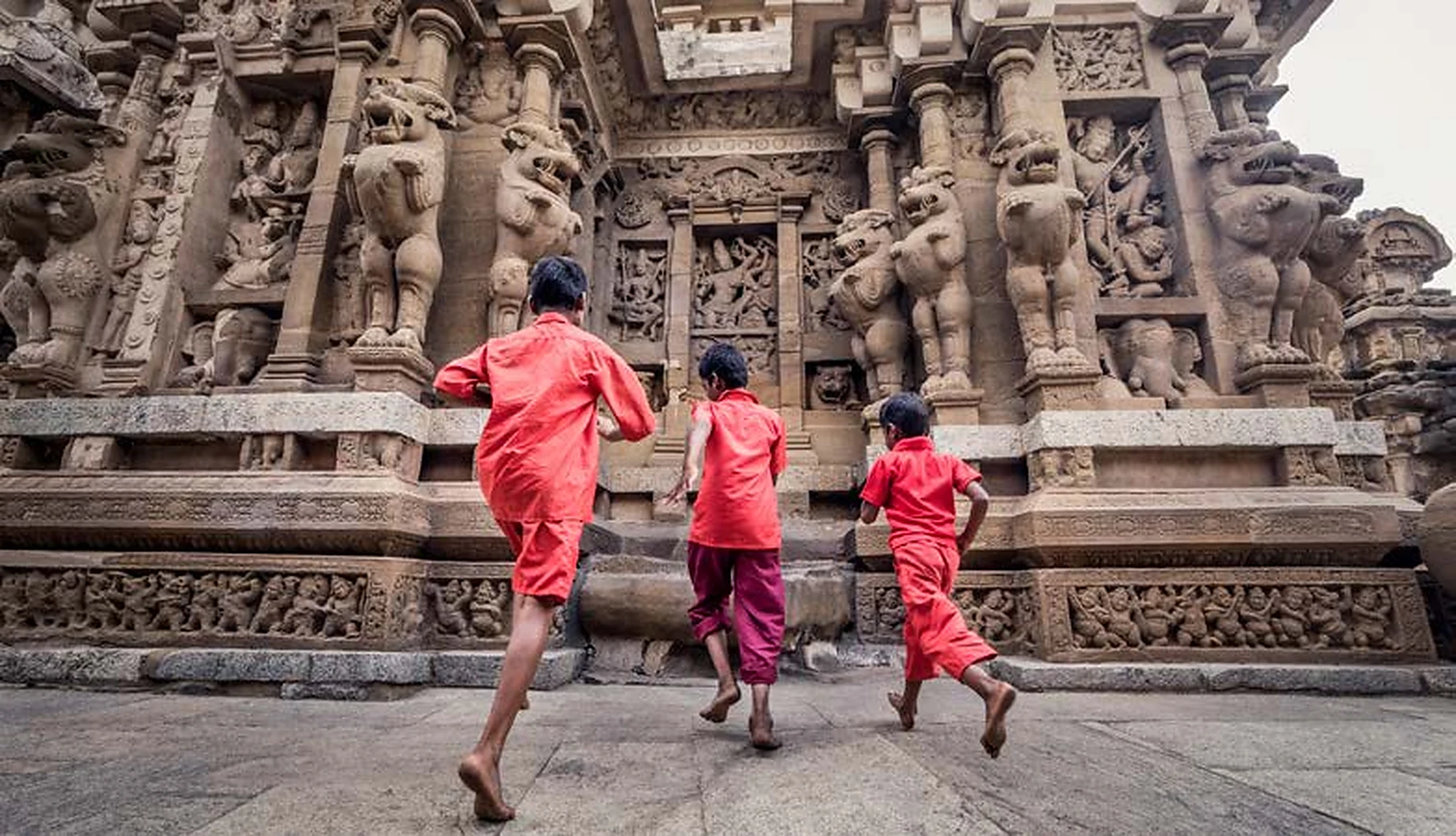
Long stone corridor lined with carved figures at Pudhu Mandapam
Pudhu Mandapam, Madurai · photographed as architecture, sculpture and a dense knowledge system.

Access changes the archive

When the obstruction moved, the monument reappeared

Amar described Pudhu Mandapam as a historic hall that had been visually obscured for generations by commercial occupation. During the pandemic, shops were relocated and access briefly changed. He sought permission to photograph the interior, creating a detailed record of its stonework, figures, textures and spatial rhythm.

The episode reveals how cultural disappearance does not always mean physical destruction. A monument may remain present while becoming inaccessible, unseen or conceptually absent from public life. Photography can restore attention before policy or conservation catches up.

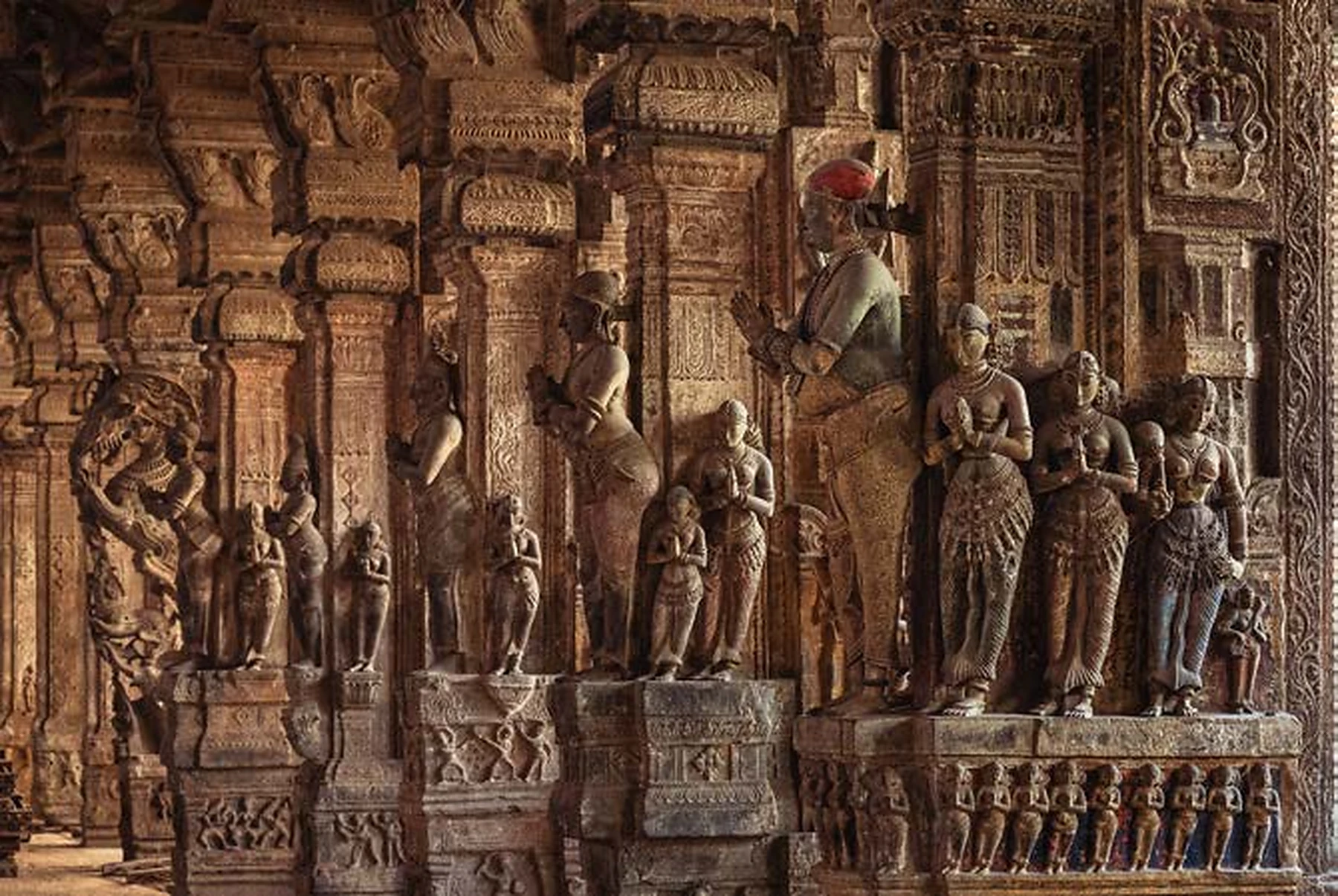
Detailed stone sculptures and pillars inside Pudhu Mandapam
Pudhu Mandapam — Thirumalai Nayak, catalogue work dated 2024.

Performing arts

A portrait can become a reference point

Amar spoke about performers and musicians with enormous cultural importance but few carefully produced portraits. By bringing folk and classical artists into a studio, or photographing them in relation to sacred architecture, he creates images that can circulate through paintings, airports, exhibitions, homes and educational material.

The objective is not only recognition. It is transmission. A child encountering such an image abroad may carry the visual language into fashion, engineering, film, code or another form that does not yet exist.

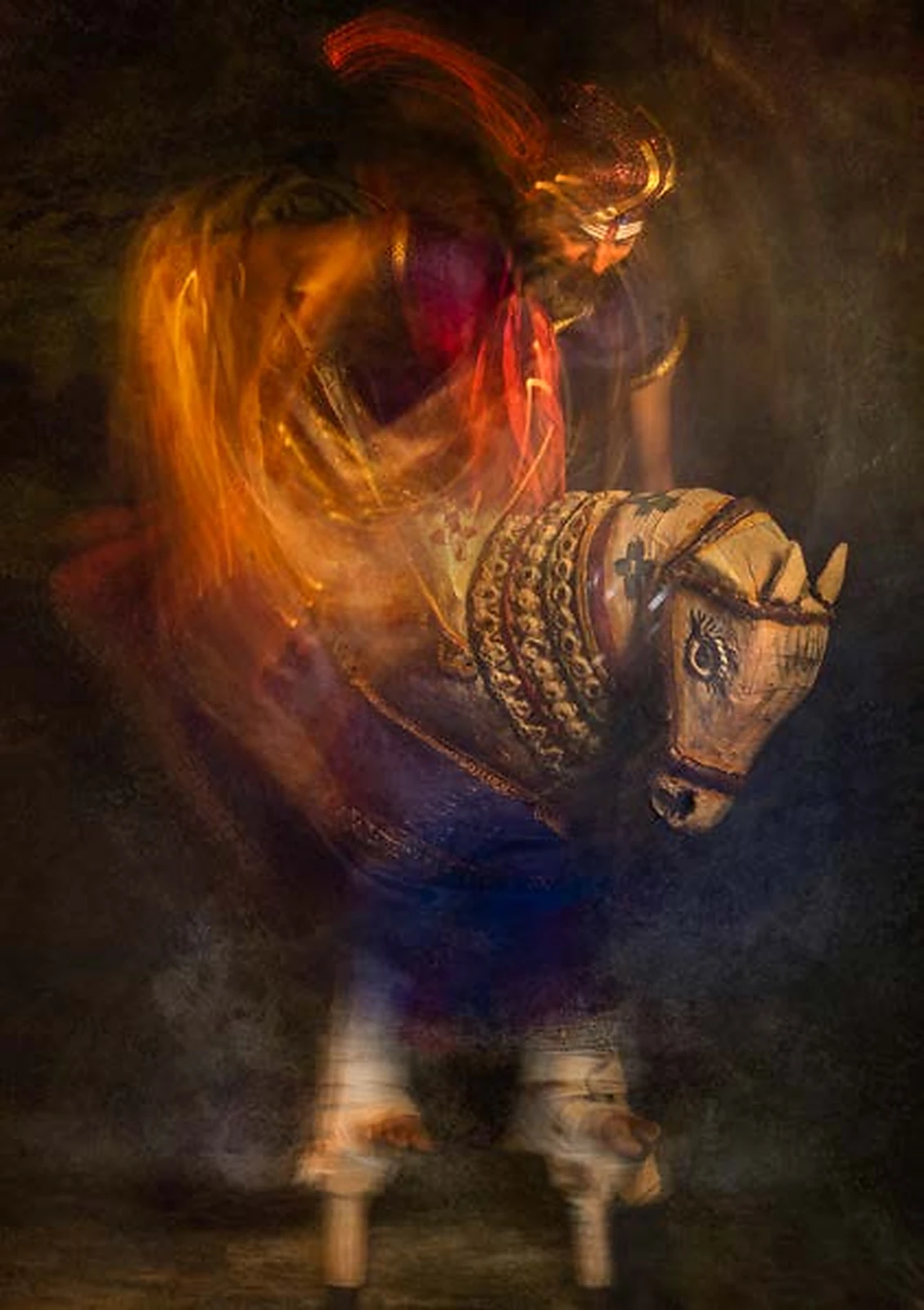
Long-exposure photograph of a Tamil folk performer and horse costume in motion
Koothu and Poikkal Kuthirai in motion.

Beyond the archive

What happens after documentation?

The most consequential part of Amar’s practice may be what happens when the photograph is no longer the final object.

Woven mats as acoustic material

In the conversation, Amar described documenting a fine grass-mat tradition practised by a small community of Muslim women: materials, colours, tools, local terminology and the complete process. The intervention then moved toward ergonomics and new use—working with engineers on seating and exploring the mat’s acoustic properties for studios and interiors.

Textile knowledge into new forms

He described placing established carpet and weaving languages in dialogue with fashion students, allowing inherited patterns and techniques to enter bags and other contemporary objects without pretending the old market will simply return.

A working object becomes an art object

A palm-based box traditionally carried by tree climbers was commissioned in multiples and offered to artists as a surface for intervention. The everyday tool became an installation, later entering a major wedding celebration as a repeated cultural object.

“I cannot expect somebody to come all the way to a village, sit there and research all of this. Through the work, they can see it—and then something else can come from it.”

Amar Ramesh, edited from the conversation

Publishing as infrastructure

Books travel where monuments cannot

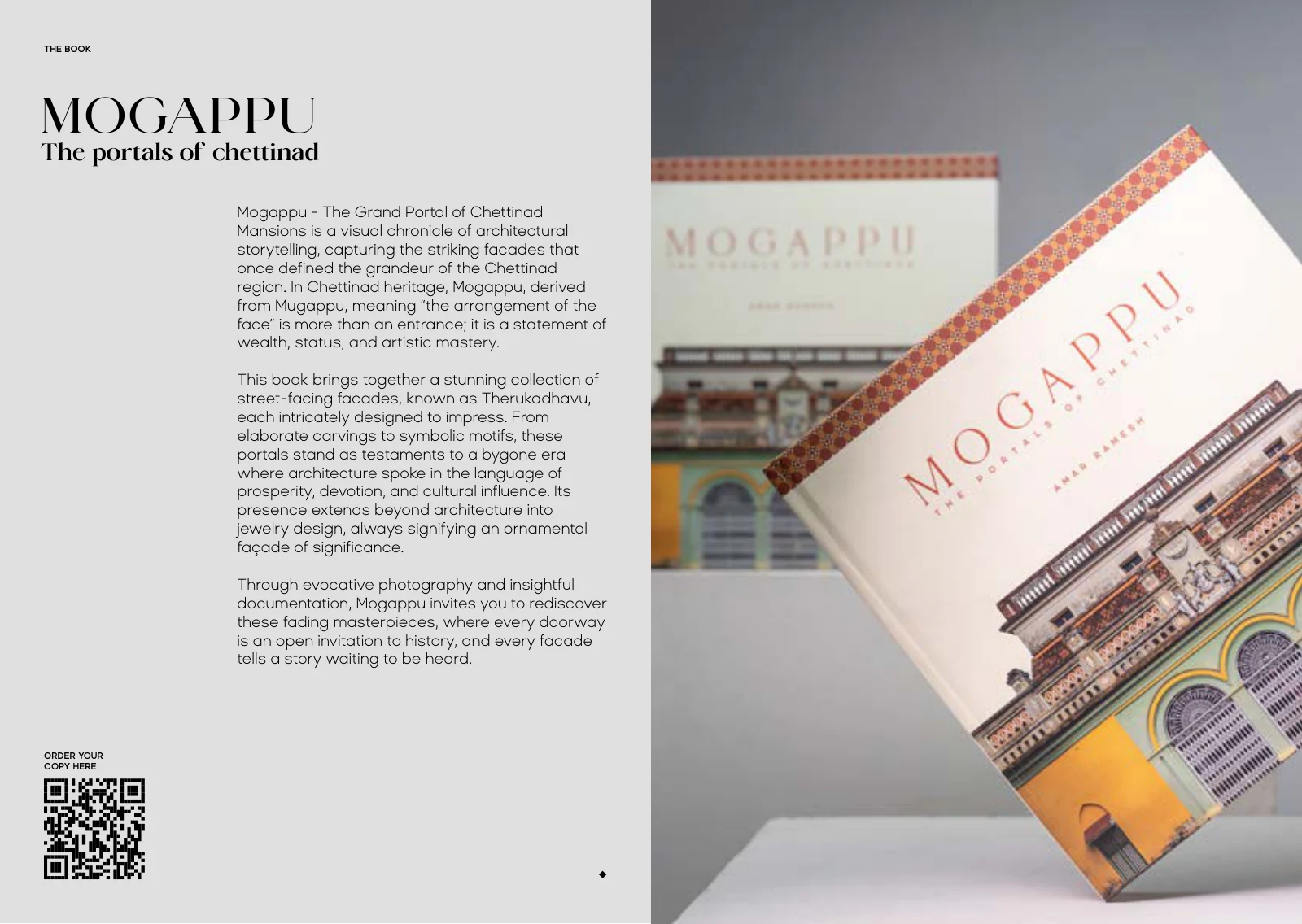
Amar’s publishing practice turns long-term fieldwork into portable cultural memory. The supplied catalogue identifies a body of books including Stones & Stories, Pudhu Mandapam, Mogappu, Madras Margazhi, Kollikannu, Aranga, Jamakkalam and Perura Pateesa.

In the conversation, he described a community willing to purchase and support these books, allowing editions to break even and, in some cases, return for reprinting. A publication can enter a home, school, embassy, design studio or diasporic household. Its reach is quieter than a viral image but potentially longer.

Explore Mara Labs ↗
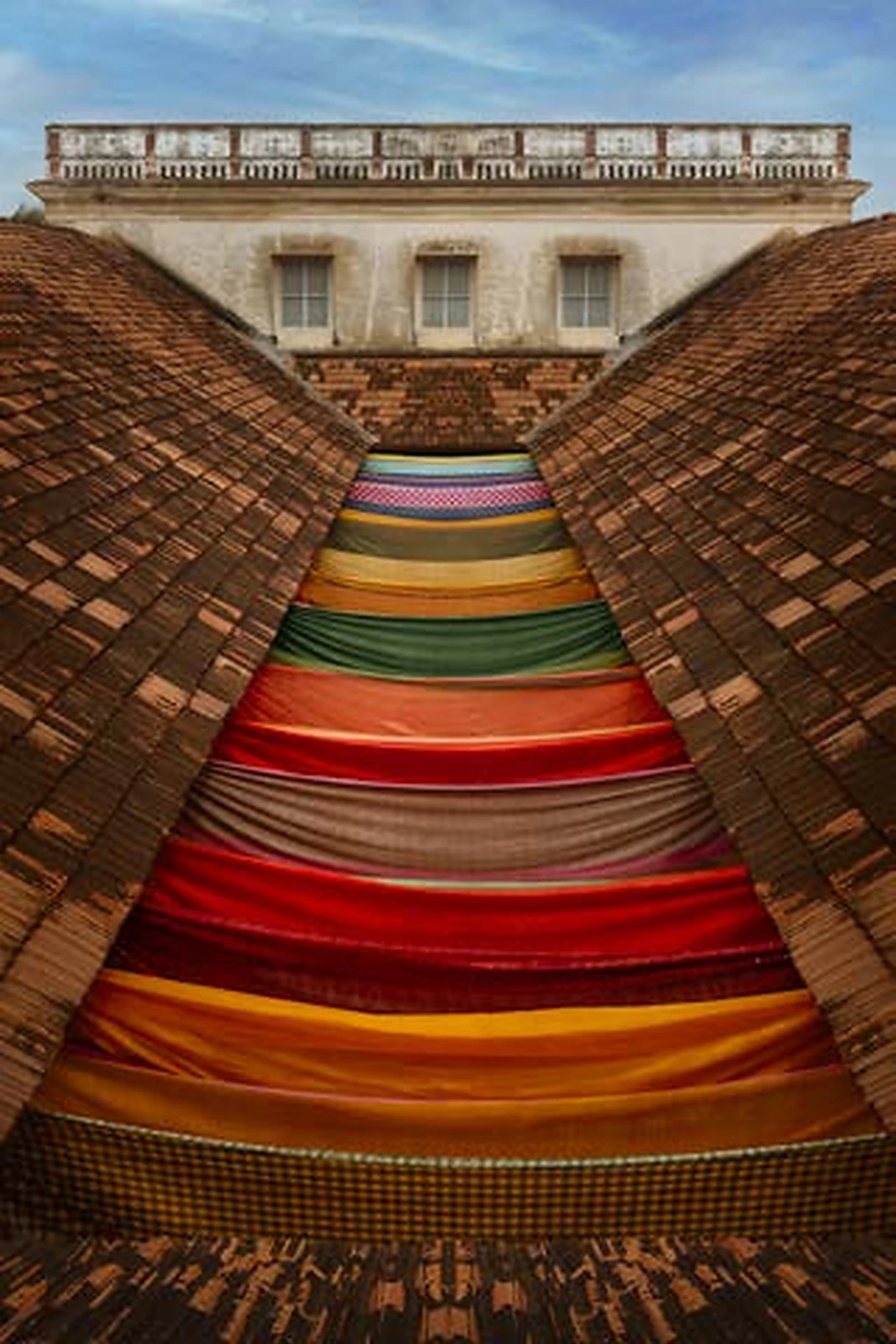
Chettinad roofs framing a vivid stack of traditional textiles

Tallulah’s reflection

Editorial interpretation

Not preservation, but transmission

What stayed with me was not simply the scale of Amar’s archive. It was his refusal to equate respect with stillness.

Preservation is often imagined as the attempt to hold an object, practice or place in its inherited form. This is sometimes necessary. Buildings require protection. Techniques require documentation. Communities require resources and rights. Yet preservation can also become a language of distance: the object is saved, but removed from the conditions that once made it meaningful.

Amar proposes a more difficult proposition. Culture should be documented precisely enough to be understood, then made available for responsible transformation. A woven mat can become acoustic architecture. A portal can become a design grammar. A folk performance can enter a contemporary image without being reduced to costume. A book can carry a mansion into a home thousands of kilometres away.

This is not automatically virtuous. Translation can flatten. Design can extract. Commercialisation can detach a form from the community that sustained it. The work therefore requires more than visibility. It requires attribution, participation, benefit-sharing and an understanding of who has the authority to adapt what.

But the alternative cannot be to let living knowledge disappear because the original market, audience or social arrangement no longer exists. The question is not whether culture changes. It always has. The question is who shapes that change, whose knowledge is recognised, and whether the people closest to a tradition participate in its future value.

Seen in this way, Amar is not only a photographer. He operates as a cultural translator, publisher, producer and systems-builder. The camera gives him access. The archive gives him evidence. The larger task is to construct new relationships around what he has seen.

Five ideas from the conversation

01

Documentation is an opening move.

An archive matters most when it can inform education, design, conservation and new forms of cultural participation.

02

Commercial work can finance cultural independence.

Studio A did not dilute the heritage practice; it created skills, a team, infrastructure and room to pursue it.

03

Visibility and survival are not the same.

A viral image may attract attention, but long-term survival requires institutions, markets, rights, knowledge and local benefit.

04

Reinvention needs cultural accountability.

Connecting tradition with technology is meaningful only when source communities and custodians remain visible and involved.

05

Books are a form of cultural diplomacy.

They allow complex visual worlds to travel slowly, materially and repeatedly across borders.

Possible institutional pathways

Where could this work enter next?

These are editorial pathways raised by the work—not claims of existing partnerships.

Museums & cultural institutes

Photography, architecture, material culture, performance and design can be presented as one interconnected cultural system.

Architecture & design education

The archive can support studios on adaptive reuse, material knowledge, ornament, vernacular engineering and cultural translation.

Embassies & cultural diplomacy

Books, talks and modular exhibitions can introduce regional Indian knowledge without reducing it to a generic national image.

Hospitality & public interiors

Commissioned displays and artist editions can place contextualised cultural work in spaces where broader publics encounter it.

Heritage technology

Structured image archives could support mapping, 3D documentation, digital interpretation and future conservation research.

Publishing & diaspora circulation

International distribution, translations and institutional editions could bring the books into homes, libraries and schools.

Curated transcript

The conversation in ten movements

Condensed from the supplied call transcript. Open each chapter to read the edited exchange.

01 Returning from Europe

Tallulah: You are back from a long European journey. Where did it begin?

Amar: I was away for about forty-five days—first London with my family, then Basel, Naples and Rome. Basel combined work and travel. In Naples I joined a week-long workshop with Steve McCurry.

Tallulah: That is already one form of international recognition. But your route into photography was not conventional.

02 The engineer who bought a camera

Amar: I grew up in India expecting to become an engineer. I studied engineering, completed my master’s in the United States and worked in technology for almost eight years.

Amar: My job required constant travel. I began staying in the places I visited instead of flying home every weekend. I bought a camera to explore—and then fell in love with photography.

Tallulah: The camera began as a way to see the places work was taking you.

03 Why return to India?

Amar: In the United States I kept noticing how well history was packaged. Even a relatively young monument might have a guide, a gift shop and a complete story around it. India has extraordinary places, but even Indians often do not know them.

Amar: I returned wanting to create a project around temples—to package them in a way the world could understand. I called the idea Land of Temples.

04 Weddings as infrastructure

Amar: The temple project was much larger than I first understood. It needed funding and a team. Then I photographed a wedding in a distinctive way, the images travelled widely, and wedding photography became the business.

Amar: I started alone and eventually built a team of around thirty-five people. After the company and brand became strong, I returned to the cultural work I had originally come home to pursue.

Tallulah: The commercial practice did not replace the mission. It built the capacity for it.

05 A four-part cultural practice

Amar: My work gradually became four things: documenting through photography and film; creating awareness through media and talks; designing interventions by connecting people who can change the conditions around an art form; and packaging the work through books and exhibitions.

Tallulah: When you say intervention, you mean that the archive should meet other disciplines.

Amar: Yes. I want to be a bridge between science, innovation, technology and the art forms.

06 The art form should not be frozen

Tallulah: Is the aim to preserve these forms exactly as they are, or to accept that some may disappear?

Amar: Neither. My goal is to reshape and reproduce them in another form. I cannot expect my daughter to sit in the street through an overnight play in the same way an earlier generation did. The question is how the knowledge can enter another system.

07 Chettinad and the disappearing mansion

Amar: Chettinad contains thousands of large mansions built through histories of trade and migration. Many owners moved away, and ownership passed through generations. Some houses now have hundreds of stakeholders. That makes maintenance and intervention difficult.

Amar: I have spent years walking through villages, asking permission and documenting entrances, carvings, pillars and interiors. Some houses in my earlier book no longer exist.

Tallulah: So the archive also becomes evidence of what has already been lost.

08 Books and a supporting public

Tallulah: How are the books financed?

Amar: I first funded the projects myself. Over time, a community formed around the work. People support and buy the books. The editions have broken even, and one went into a reprint of a thousand copies.

Tallulah: A book can carry the work into a diasporic home and remain there for another generation.

09 From mat weaving to acoustic design

Amar: We documented a traditional mat practice in great detail—the grass, dyes, patterns, tools, names and engineering drawings. But we also asked what the material could become now.

Amar: We worked on better seating for the weavers and explored the mat as a sound-absorbing material for studios and interiors. The point is to create another reason for the knowledge to survive.

10 Crossing borders

Amar: The work receives a strong response in India, but I want the ideas to move beyond our borders. I want to show the books, photographs and installations in museums, embassies and major cultural spaces.

Tallulah: The positioning should therefore not be limited to photography. This belongs in conversations about architecture, design, heritage, education, tourism, cultural diplomacy and technology.

Sources & credits

Primary material

All Amar Ramesh photographs remain the property of their creator and are used here as a working prototype from the supplied catalogue. Confirm web publication, cropping and download permissions before launch.

The Artistic Conversations

Conversations that do not end when the call ends.

I develop long-form conversations, editorial features and public programmes that connect artistic practices to the institutions, systems and questions around them.

Explore TheSwissPanAfrican